In 2026 I am organising in Bologna a structured series of legal training seminars formally accredited by the Bar Council of Bologna for the purposes of mandatory continuing professional development. Each event has been recognised with two CPD credits, as confirmed by the official communication of the competent Commission.
Although these seminars are framed within the Italian and European Union legal system, the issues addressed are highly relevant for a UK audience — barristers, solicitors, immigration practitioners, academics and policy specialists concerned with asylum, human rights and removal procedures.
Complementary protection under Article 19 of the Italian Consolidated Immigration Act (Legislative Decree no. 286/1998) is not a marginal or discretionary device. It functions as a structural safeguard within the migration system, ensuring that removal or refusal decisions are compatible with fundamental rights, particularly the right to private and family life and the principle of proportionality. Even after Brexit, the European Convention on Human Rights remains central to UK immigration litigation, and the parallels with Article 8 ECHR jurisprudence are evident.
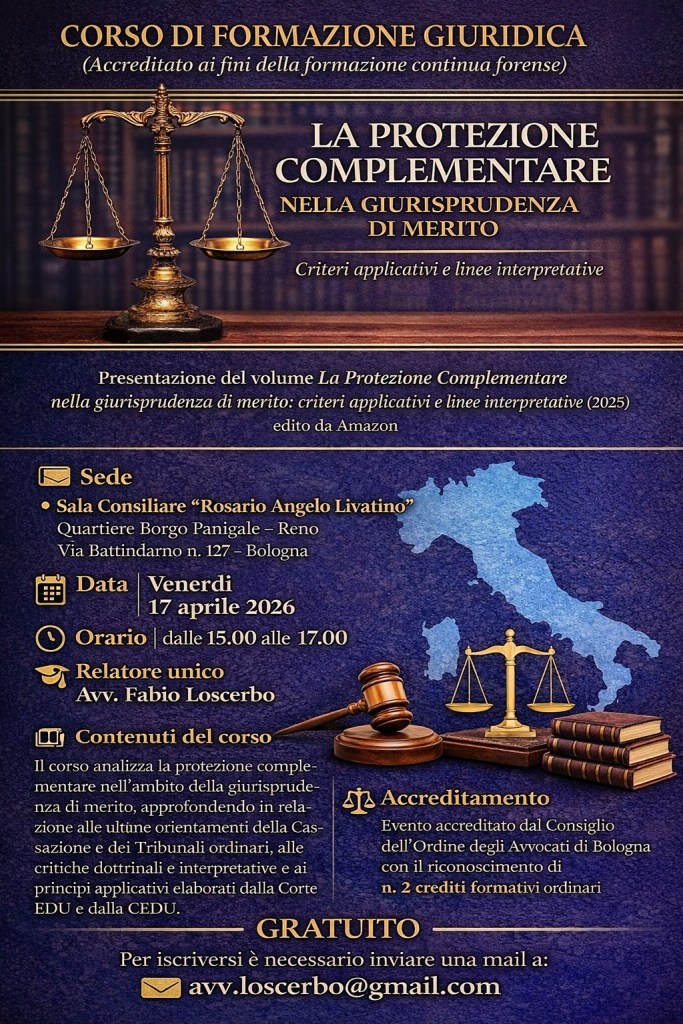
The first seminar examines complementary protection in Italian merits case law, analysing interpretative trends of ordinary courts and the role of the Supreme Court of Cassation, alongside the dialogue with the European Court of Human Rights. Particular emphasis is placed on integration as a legally relevant factor and on evidentiary construction in proceedings.
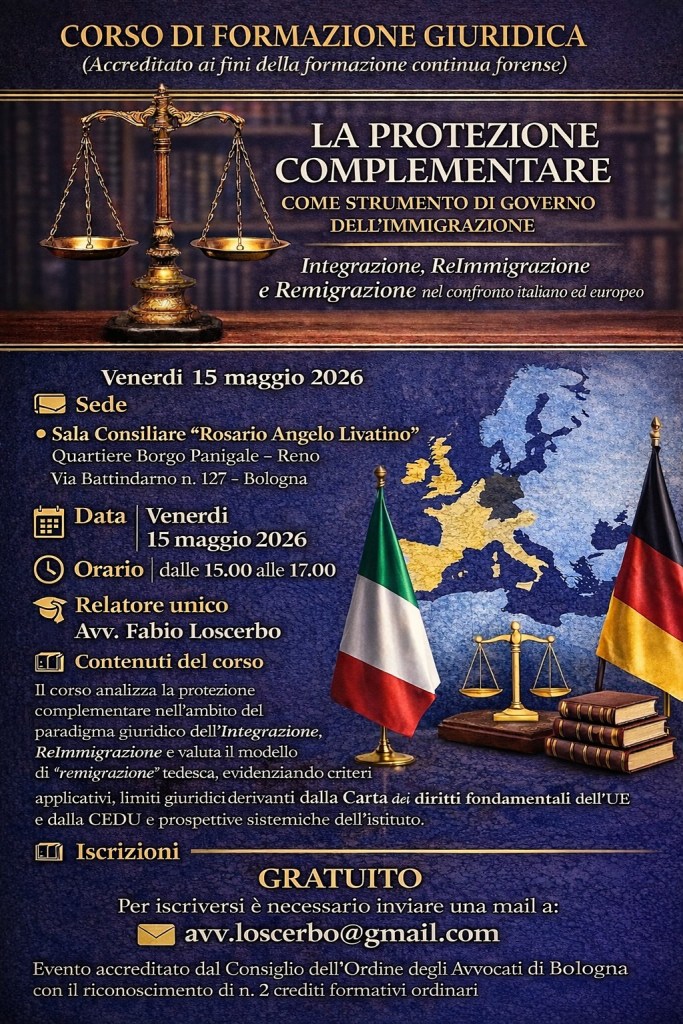
The second seminar adopts a broader systemic approach. Complementary protection is explored as an instrument of migration governance within a clear regulatory framework: integration as the basis for lawful permanence, and reimmigration as the lawful consequence where integration demonstrably fails. The comparative dimension, including debates that have emerged in Germany and elsewhere in Europe, allows for a sober and legally grounded reflection on how democratic systems can maintain control without undermining rights.
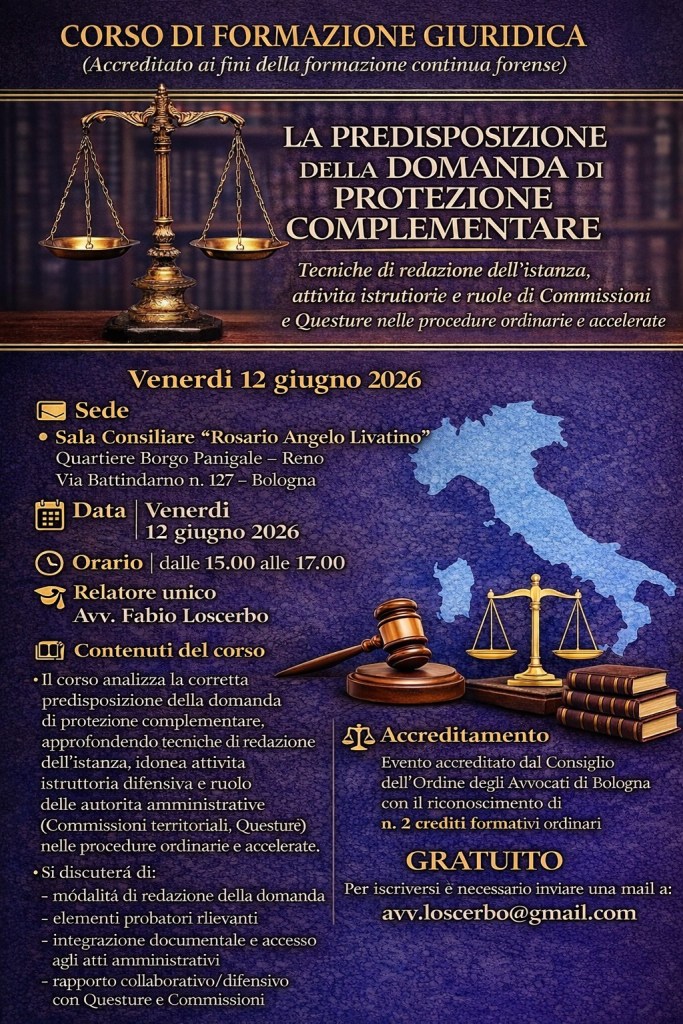
The third seminar is entirely practice-oriented. It focuses on drafting applications for complementary protection, structuring documentary evidence, accessing administrative files, and engaging with competent authorities in both ordinary and accelerated procedures. In a procedural environment increasingly characterised by expedited decision-making, technical accuracy is decisive.
For a UK audience, these themes resonate with discussions surrounding humanitarian protection, discretionary leave, deportation appeals, and Article 8 proportionality assessments before the First-tier Tribunal and Upper Tribunal. The structural question is comparable: how to reconcile migration control with a robust human rights framework anchored in the rule of law.
Any colleagues, universities or research institutions in the United Kingdom interested in comparative materials are welcome to contact me directly. Upon request, I can provide teaching materials, slides and written handouts used during the seminars, in order to facilitate professional and academic exchange.
Complementary protection is not a political slogan. It is a legal instrument that shapes the coherence of the entire migration system. Understanding its technical foundations is essential for anyone engaged in contemporary immigration law.
Avv. Fabio Loscerbo

Lascia un commento